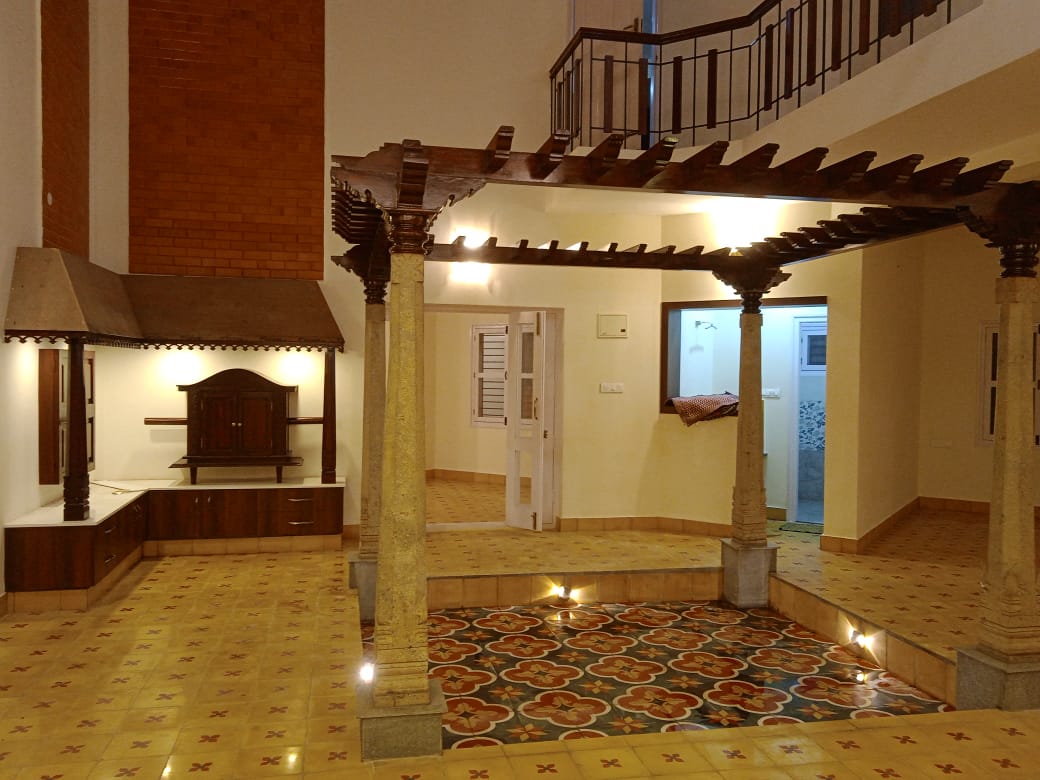
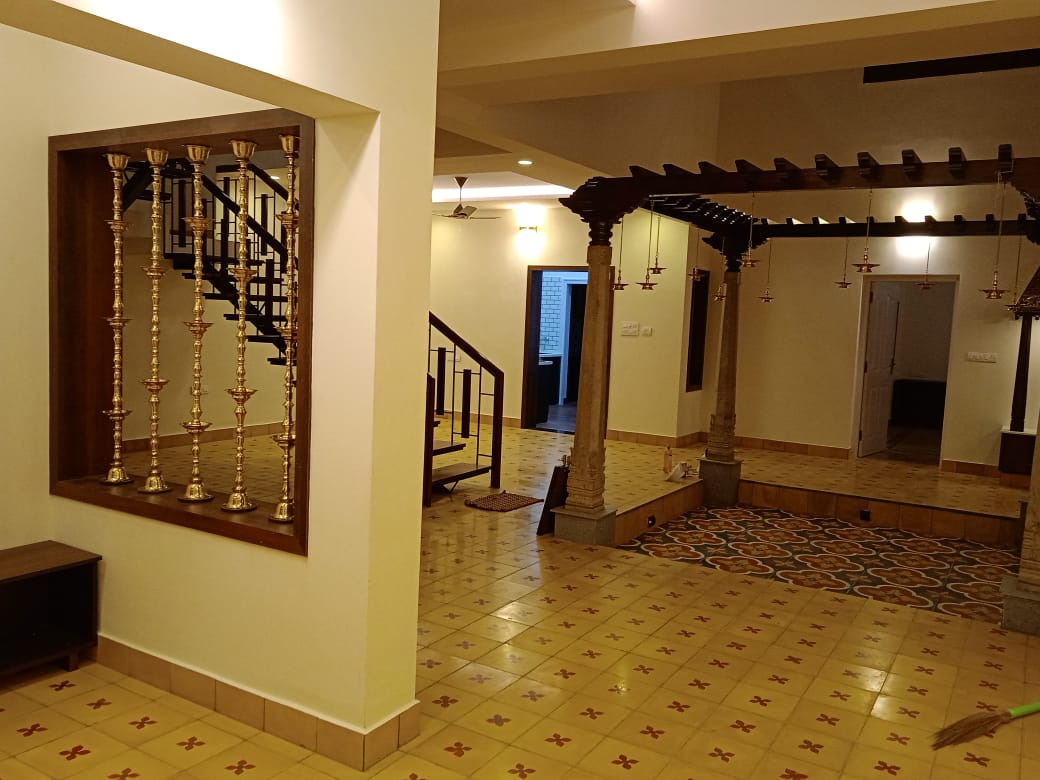
For most Chennai households, the pooja room isn't just another interior feature — it's the emotional center of the home. Getting the design right means balancing tradition, available space, and everyday practicality, especially in apartments where space is limited.
Designing for Apartment-Sized Homes
Most Chennai apartments today don't have room for a dedicated pooja room, and that's completely workable. Common approaches we design around:
Wall-mounted pooja units — a compact cabinet-style unit mounted on a wall or in a corner, ideal for 1-2 BHK apartments. Takes up minimal floor space while still creating a defined sacred space.
Pooja units within a passage or corridor niche — using an otherwise unused wall recess or corridor dead-space, keeping the main living area untouched.
Sliding or folding-door pooja cabinets — a closeable unit that keeps the space tidy and dust-free when not in use, popular in open-plan living/dining layouts.
Material and Finish Choices
- Teakwood or engineered wood with wood finish — the traditional, most-requested look, warm and long-lasting
- Marble or Corian backdrops — for a more premium, low-maintenance finish, especially behind the idol placement area
- CNC-cut jali (lattice) panels — a very popular current trend, giving an intricate, temple-like backdrop with backlighting
- Brass or copper accents — small detailing touches that add a traditional richness without high cost
Pooja Room Cost in Chennai — Approximate Ranges
| Type | Approximate Cost |
|---|---|
| Simple wall-mounted wooden unit | ₹15,000 – ₹35,000 |
| Mid-size pooja unit with CNC jali backdrop | ₹35,000 – ₹65,000 |
| Premium pooja unit (marble/Corian + lighting + CNC work) | ₹65,000 – ₹1.2 lakh+ |
| Dedicated small pooja room (full room, not just a unit) | ₹80,000 – ₹2 lakh+ |
Lighting (especially warm LED backlighting behind jali panels) typically adds ₹3,000–₹8,000 depending on complexity, and is one of the highest-impact, lowest-cost upgrades for this space.
Design Tips That Make a Real Difference
- Keep ventilation in mind. A pooja space with daily lamp or incense use needs some airflow — a small vent or proximity to a window helps prevent soot buildup on walls and ceilings.
- Plan storage for pooja items. Drawers or shelves for lamps, incense, and prasadam items keep the space clutter-free — easy to forget until it's built without them.
- Think about idol placement and eye level before finalizing unit height — this is usually guided by family preference and traditional placement (Vastu) considerations.
- Use warm, soft lighting rather than bright white — it creates the right atmosphere and photographs beautifully for the rest of your home's aesthetic too.
Let's Design Yours
Every family's pooja room needs are different — some want an elaborate CNC-jali centerpiece, others just need a clean, compact unit that fits a tight corner. At Green Kalam Interior, we design pooja spaces as part of full home interiors or as a standalone addition to an existing home.