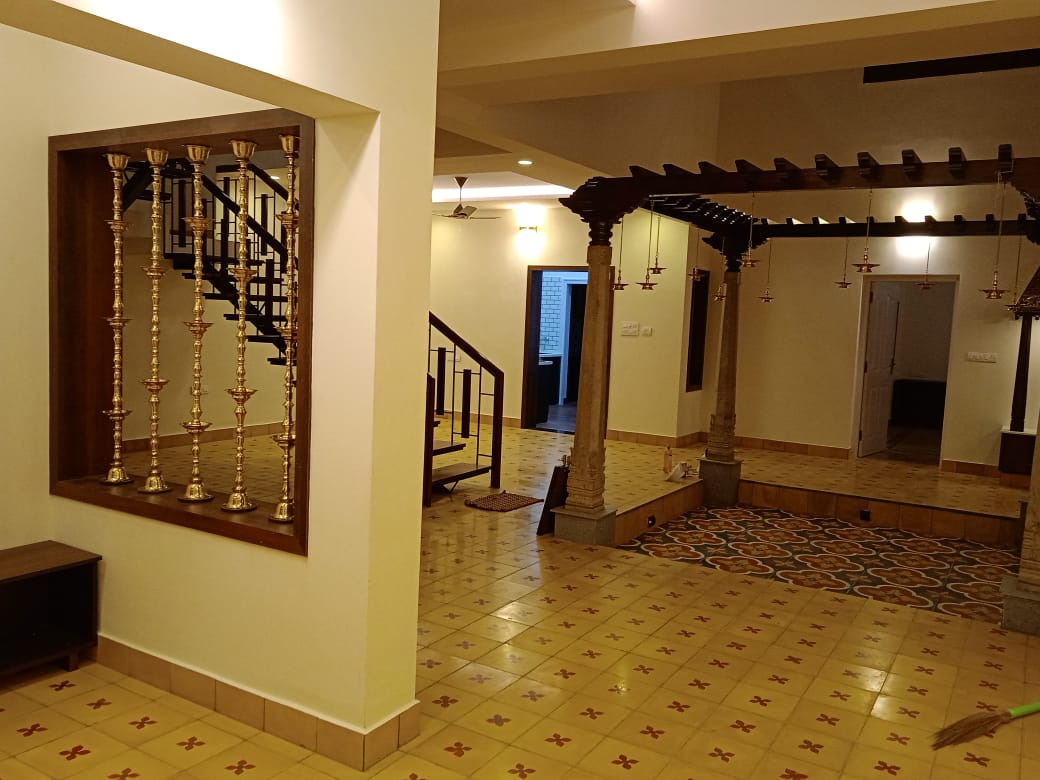
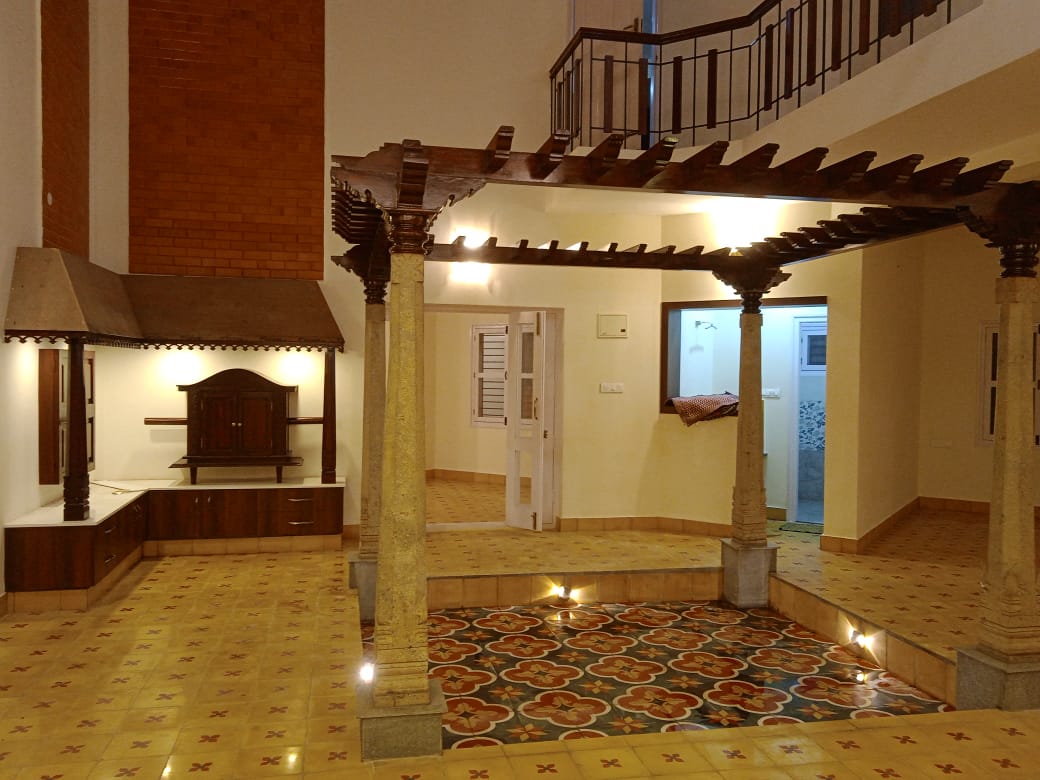
Some projects are a joy simply because of how much heritage they carry. This one — a full Karaikudi Chettinadu style interior we recently completed in Mysore — is exactly that kind of project. Across 2000 sq.ft, the brief was clear from day one: bring the grandeur, materials, and craftsmanship of a traditional Chettinadu home into a modern residence, without losing any of its authenticity.
What Makes a Home "Chettinadu Style"
Chettinadu architecture, native to the Karaikudi region of Tamil Nadu, is instantly recognizable — tall wooden pillars, ornate detailing, and a material palette built to last generations rather than years. Recreating it faithfully means sourcing the right materials and working with craftsmanship that respects the original tradition, which is exactly the approach we took on this project.
Wooden Pillars: The Structural Signature
No Chettinadu-style home is complete without its wooden pillars, and this home features them prominently through the living spaces. Beyond their structural presence, these pillars carry the visual weight of the entire design — tall, dark-toned, and finely detailed, they immediately signal the traditional character of the home the moment you walk in.
Gold Foil Pooja Unit: The Centerpiece
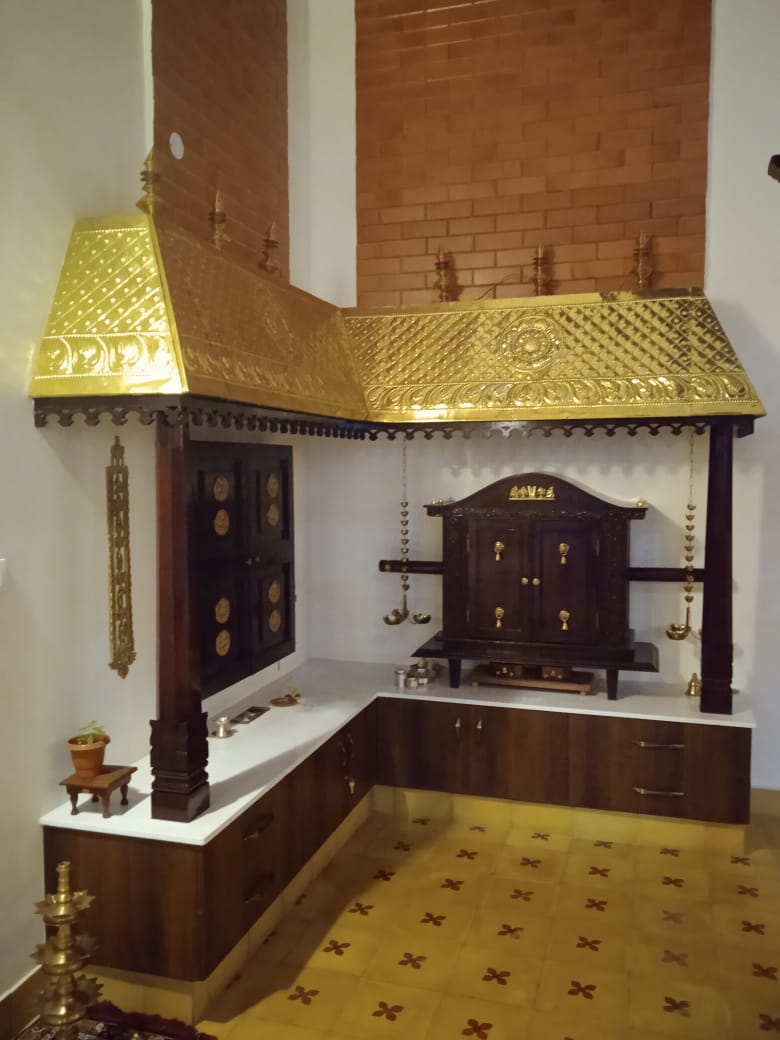
The pooja unit in this home is a true showpiece — a gold-foil finished roof structure in the classic Chettinadu temple-style silhouette, with intricately embossed patterns catching light beautifully from every angle. Paired with a dark wood pooja cabinet with brass detailing, brass bells, and traditional wall-mounted deity panels, this unit anchors the entire home both visually and spiritually. It's the kind of feature that takes real skill and patience to execute well, and it's become the heart of this residence.
Athangudi Tiles: Color Underfoot
Athangudi tiles are synonymous with Chettinadu homes, and this project uses them extensively across the flooring. Handmade using traditional techniques native to the Athangudi village near Karaikudi, these tiles bring rich, saturated colors and bold geometric patterns that no machine-made tile can fully replicate. In this home, they run through the main living and pooja areas, immediately setting the traditional tone underfoot.
Brass Kuthu Vilakku: Traditional Lighting
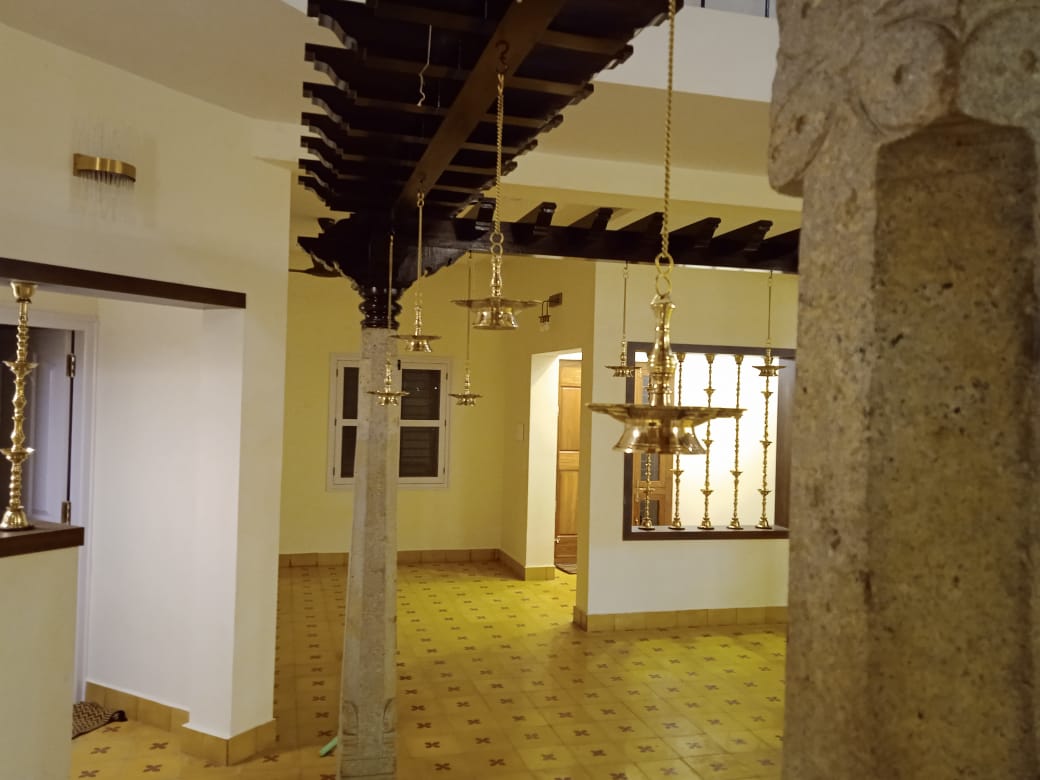
Hanging brass Kuthu Vilakku lamps are placed throughout the home, adding both functional and ceremonial lighting in true Chettinadu tradition. These traditional oil lamps are more than decorative — they carry cultural and spiritual significance in Tamil households, and their presence here reinforces the home's authentic character.
A Wooden Staircase to Match
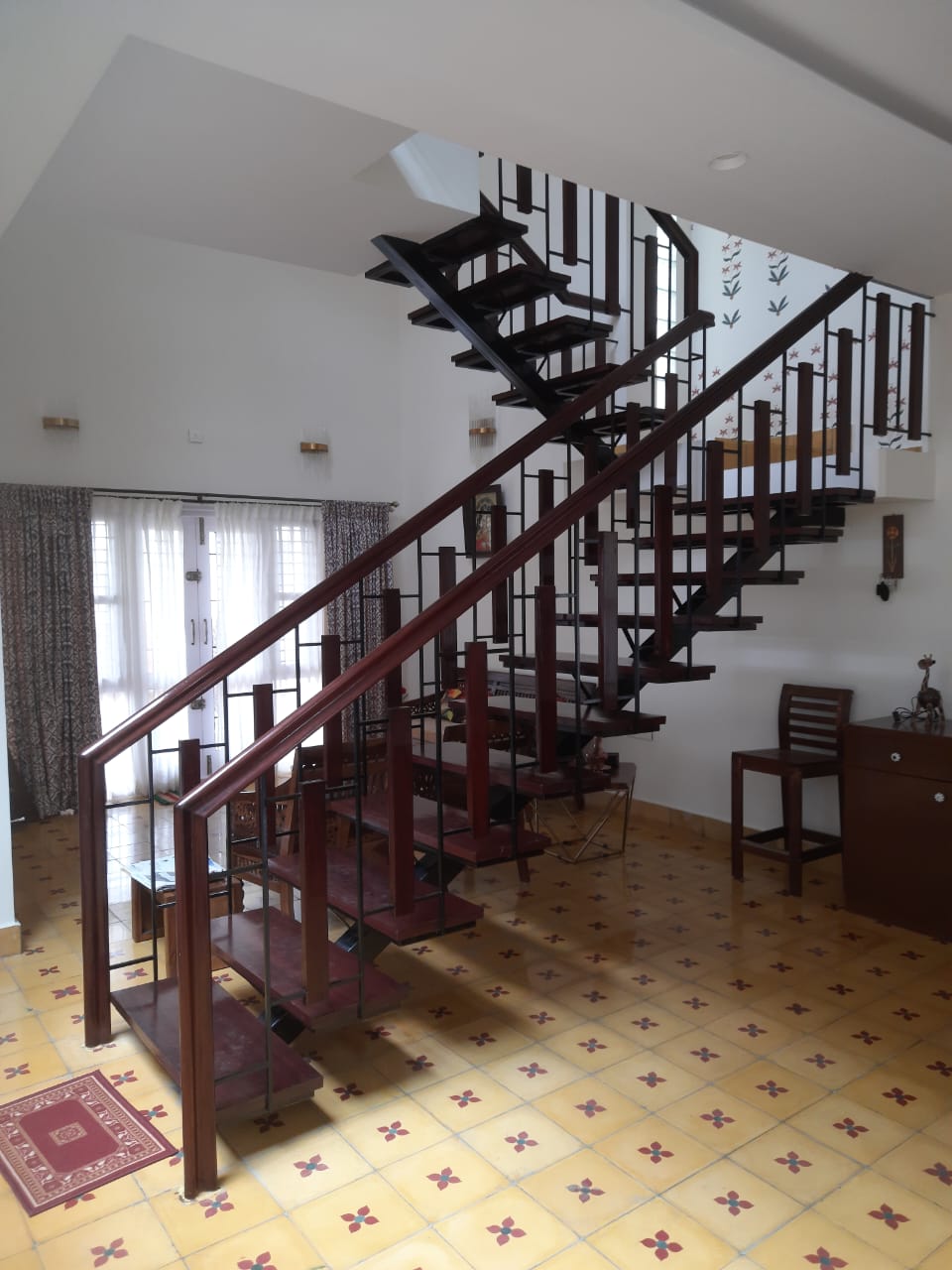
Continuing the material language of the rest of the home, the staircase is built in wood, matching the tone and craftsmanship of the pillars and pooja unit. It's a detail that easily gets overlooked in modern interiors, but here it was treated as importantly as any other structural element — because in a home like this, every material choice needs to speak the same design language.
Why This Project Mattered to Us
Projects like this are rare — clients rarely ask for full traditional recreation at this level of detail, and it takes real coordination to source authentic materials like Athangudi tiles and gold foil craftsmanship for a project outside Tamil Nadu. Completing this 2000 sq.ft home in Mysore, fully in Chettinadu style, is one of our proudest recent projects.
Want a Traditional Interior of Your Own?
Whether it's a full Chettinadu-style home, a single pooja room with authentic detailing, or simply incorporating traditional elements into a modern space, we'd love to help bring that vision to life.